

Most watch strap reviews are based on the day the leather arrives. That’s the worst time to form an opinion. After a five-year relationship with a fine calfskin leather watch strap, it doesn’t behave the same way it did when you first got it.
This guide records, step by step, what calfskin leather will do in years 1, 2, and 5 of actual wear: breaking in, patina, maintenance, and failure. If you’re considering whether a leather strap is right for you and your watch, read this timeline first.
Year 1: The Leather Learns Your Wrist
The first three months are the shaping part. The calfskin has to break in before it becomes soft, and the leather strap will set in two places: where it crosses the spring bars and where it folds at the buckle. Those creases are not removable, and they’re normal. By month three, the strap is completely flat, and the holes you use most often feel slightly softer than the others.
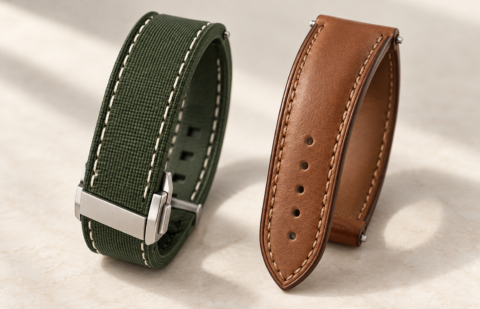
Color moves early. You can see this within weeks on tan Barenia. It reads as depth on dark brown, as change on light brown. It appears as a sheen on black.
Water marks you get now will develop a patina later. Sweat wiped off the same day will not stiffen the leather. That’s why the best time to get your calfskin watch straps is actually in year one – dry them, rotate them, let them shape themselves.
Year Two: Patina Is Now Visible to Other People
After the second year, the calfskin has a surface history. The grain is polished, creases deepen without splitting, and the holes elongate slightly, but don’t tear. This is the year when a good leather strap is indeed a good leather strap, and a bad one appears worn out.
The finish is the dividing line in almost all cases. Oil-finished hide takes on wear and develops character. Coated hide absorbs nothing, and shows wear as cracking in folds.
Year Five: Heirloom or Replacement
After five years of wear, the calfskin strap is typically the most stylish piece of clothing you’ll own. The color is even, deep, and settled, with a nice satin finish and edges with a natural burnished look that no factory finish can reproduce. Here’s what a leather strap that gets better with use means.
When it does break, it’s mechanical, not cosmetic. The fold cracks on a strap pulled through a tang buckle daily, or a buckle hole keeps opening until it tears through. A deployant clasp avoids both, as leather won’t bend at the buckle, which is why most calfskin straps with clasp buckles are still in use today.
Is a Calfskin Strap Right for Your Watch?
Use fine calfskin on the watch you want to grow old with. Worn in rotation and managed well, the strap on a dress watch or any other piece will look better at the end of 10 years than it did when it was first purchased. It’s more expensive than rubber or sailcloth, but can last much longer.
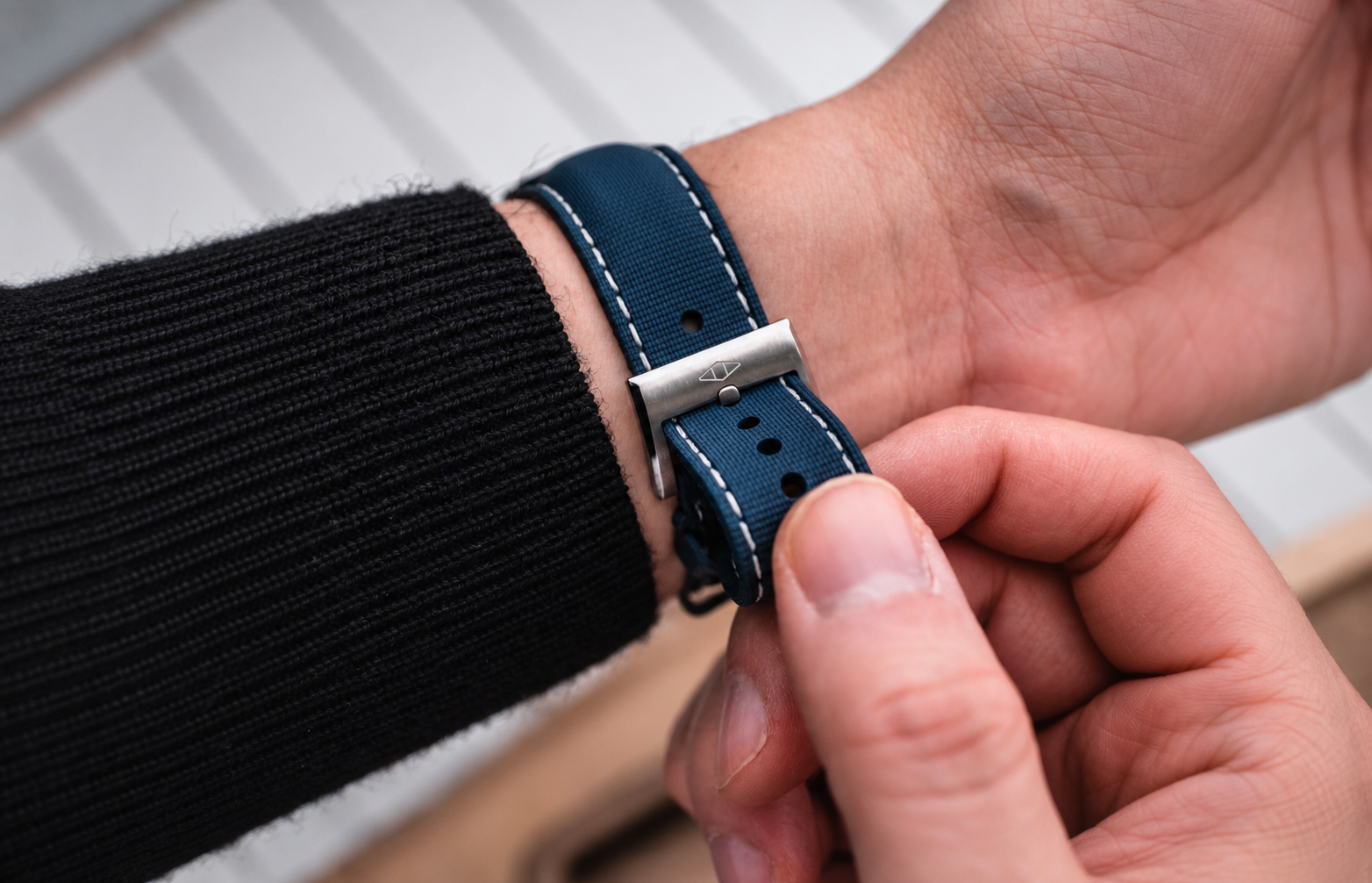
Calfskin is the wrong material for a watch that gets wet or sweats on each trip. Open-finish leather can handle a splash and doesn’t like anything else. Sailcloth (like Artem’s) for the sports watch provides weather resistance calfskin can’t match, with an embossed upper surface over leather and a rubber liner. It will never patina, and that’s the trade-off. Buy calfskin for the watch you’ll wear. Treat it well in year one, leave it alone in year two, and by year five you will own the strap everyone else asks about.