

Most people spend weeks choosing a watch and about four minutes choosing the strap it lives on. The strap sits against your skin all day, it’s half of what people see on your wrist, and a bad one can make a watch you saved up for look cheap.
Leather is where most of us start. It suits almost everything, it improves with age if you look after it, and it feels warmer on the wrist than steel or rubber. But “leather strap” covers a huge range of quality, from stiff bands that crack within a year to straps that will outlast the watch. Here’s what separates the two.
Start with the grade of leather
The label matters more than the colour. Full-grain leather is the top layer of the hide with its natural grain left intact. It’s the strongest, it breathes, and it’s the only kind that develops a proper patina.
Top-grain has had that surface sanded or buffed to remove marks. It’s still decent, but it won’t age with the same character.
Then there’s “genuine leather”, which sounds reassuring and isn’t. It usually means the lower layers of the hide, sometimes bonded together and finished with a printed grain. Not great for something that bends hundreds of times a day against a warm wrist.
Tanning and finish change everything
Vegetable-tanned leather uses natural tannins from bark and plants. It’s firmer at first and darkens nicely with sun and handling. Chrome-tanned leather is quicker and cheaper to make, soft straight away and good with bright colours, but it tends to look much the same in three years as it did on day one.
The finish counts too. Heavily coated leathers look shiny and even but can crack at the flex points. Lightly waxed or oiled leathers breathe and age better.
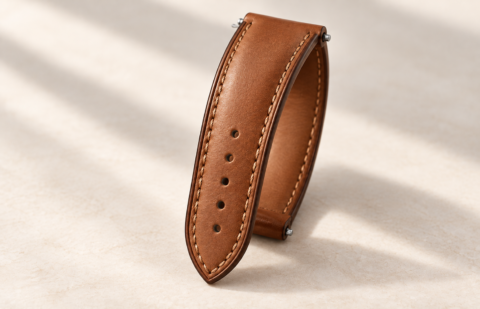
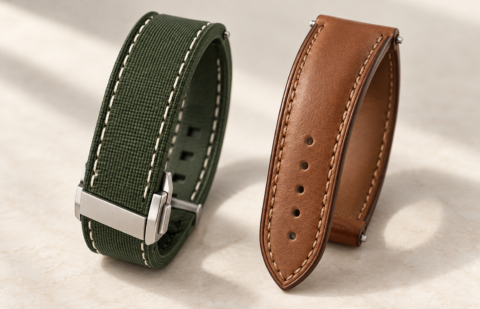
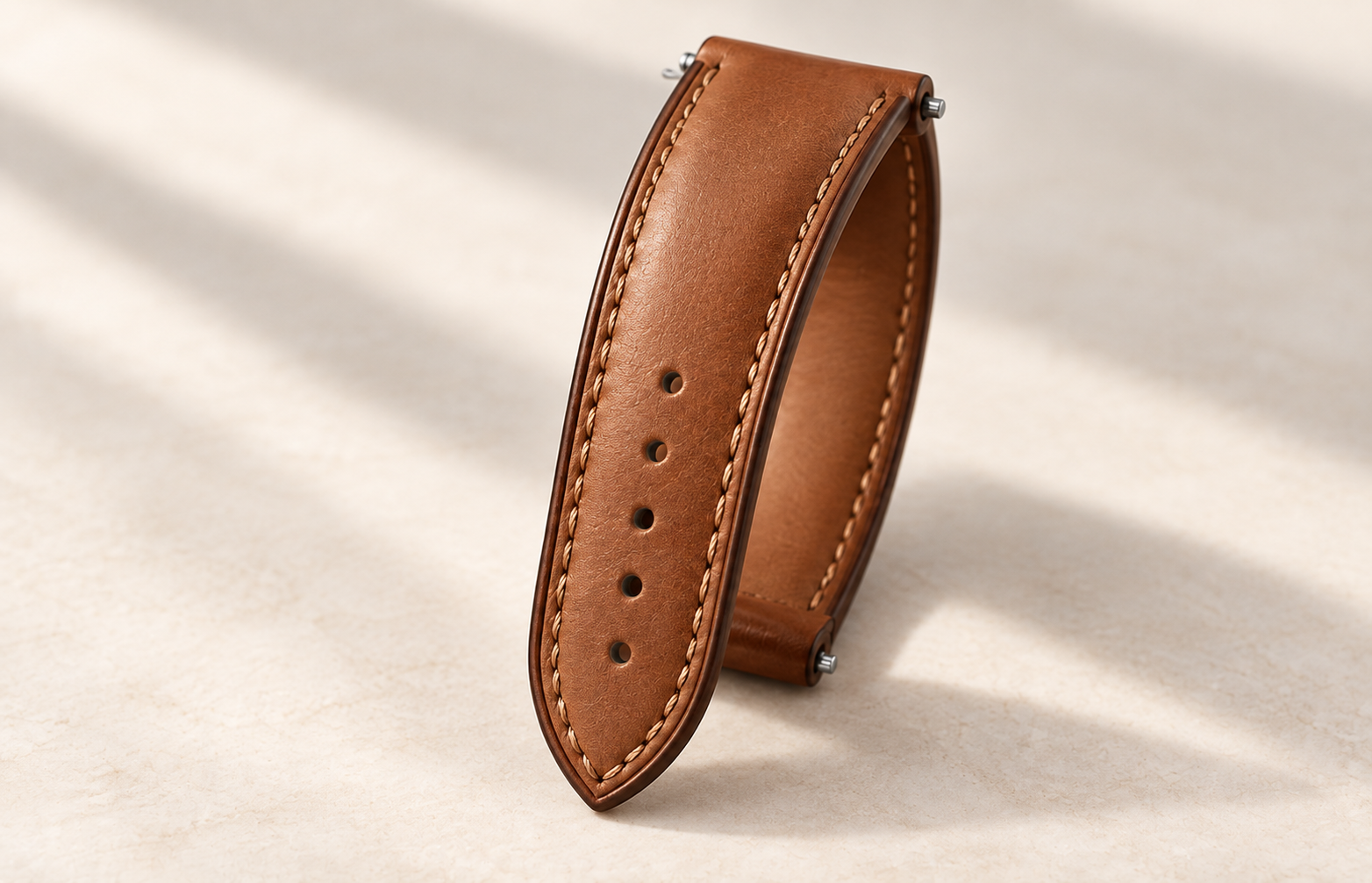
Barenia calfskin, with its long history in saddle-making, is a good example of the second kind. It marks and mellows rather than peeling, which is why Artem Straps chose it for its Loop-less leather straps. Water tends to bead off the surface instead of soaking in, and the strap feels comfortable from the first day.
Look closely at how it’s made
Two straps cut from the same hide can feel completely different depending on how they’re put together. Check these before you buy:
- Taper. A good strap narrows from the lugs to the buckle, usually by 2 to 4mm. A 20mm strap tapering to 16 or 18mm looks more refined than one that stays the same width.
- Padding. Padded straps suit chunkier sports watches. Flat straps sit closer to the wrist and work better on slim dress pieces.
- Edges. Run a finger along the side. Edges should feel smooth and sealed. Rough edges are where a strap starts to come apart.
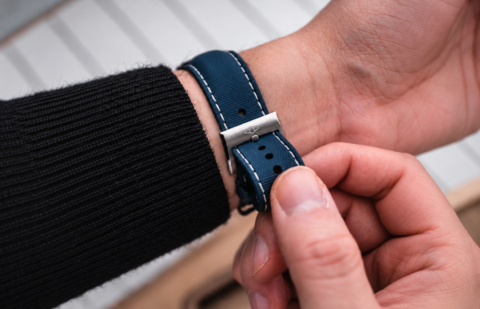
- Stitching. Tight, even stitches show someone took their time. Contrast stitching reads casual; tonal stitching keeps things dressier.
- Spring bars. Quick-release bars let you swap straps in seconds without tools or scratched lugs.
Get the size right
Measure the gap between your watch’s lugs in millimetres. That’s your lug width, and it’s the one number you can’t fudge.
Length comes next. With a smaller wrist, look for a short option so you’re not left with a long tail flapping past the keeper. With a larger wrist, make sure there are enough holes to give you room in summer, when wrists swell a little.
Match the strap to the watch
There are no hard rules, but some pairings almost never miss.
Dress watches look best on slim, flat leather in black, dark brown or navy, with quiet stitching.
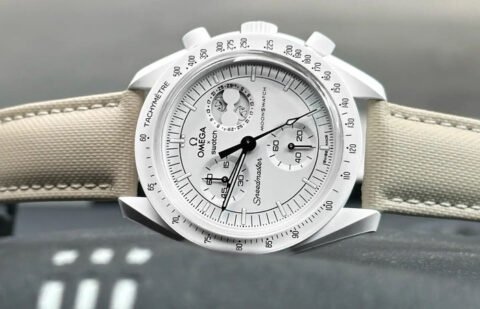
Field and pilot watches suit tan, olive and rugged browns that will scuff and darken as you wear them.
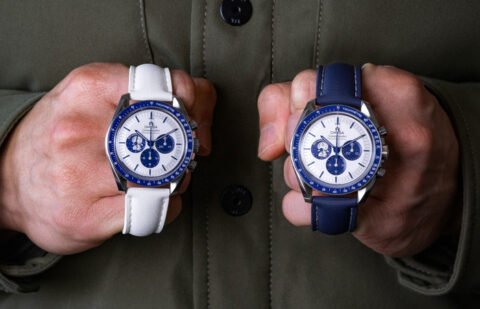
Chronographs and sports watches can carry a padded strap or a richer colour like burgundy or forest green.
Divers are the divisive one. Leather can look excellent on them, as long as you’re not planning to swim in it.
As for case metals, black and grey sit easily with steel, warm browns flatter gold and bronze, and burgundy gets along with nearly everything.
Buy one good strap, not three average ones
A well-made leather strap isn’t cheap, but it’s still the cheapest way to change how a watch looks and feels. Spend a bit more on one strap that ticks the boxes above, keep something water-friendly for summer, and it’ll repay you for years.
If you’d like a place to start, the Loop-less Barenia range from Artem Straps is worth a look, particularly if you like the clean finish of a deployant clasp. Otherwise, keep this checklist handy next time you’re shopping and you won’t go far wrong.